
«Consent issues are a massive roadblock for the implementation of NAMs»
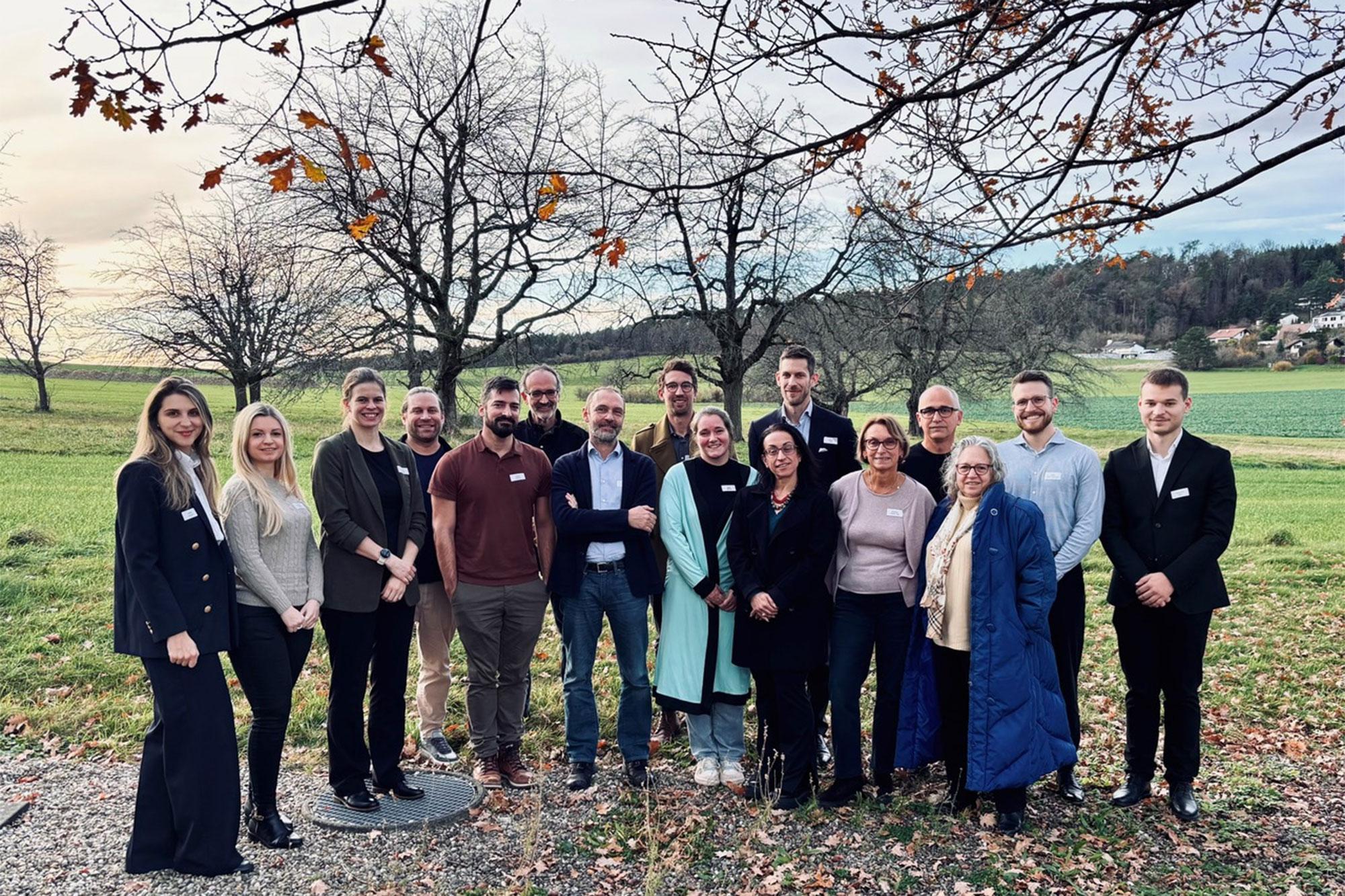
Organoids are promising alternative methods in biomedical research, but their use raises ethical and legal questions. In a co-creation workshop, researchers discussed ways to improve informed consent in organoid research.
Organoids—miniaturised, three-dimensional tissue models generated from donated cells—are increasingly used in biomedical research. Organoids have great potential as Novel Alternative Methods (NAMs) and, in certain cases, could offer significant scientific advantages over animal models. This could contribute to the implementation of the 3Rs (Replace, Reduce and Refine) principles. At the same time, their versatility and long-term usability pose substantial challenges for informed consent. Donors need to understand not only that their donated biological materials may be used for research, but also that this research could lead to marketable products, like organoids. In addition, specific informed consent procedures should provide donors with clear and detailed information about what organoids are, how they are generated from donated biological material, and how they may be used in research and medical development.
Co-creation to strengthen informed consent
To improve the informed consent process and facilitate a responsible approach to use organoids, the Centre for Life Sciences Law (ZLSR) of the University of Basel launched the NRP 79 project “The Use of Organoids to Promote 3R under Swiss Law”. As part of this project, an interdisciplinary co-creation workshop was organised in November 2025 to address informed consent as a key implementation challenge for organoid research and Novel Alternative Methods (NAMs). The workshop was funded by the Swiss National Science Foundation as an implementation project within the NRP 79 programme. To discuss these issues, representatives from the pharmaceutical industry, biotech, biobanks, academia, patient organisations, regulatory authorities and ethics committees participated in the workshop.
The three days of discussions demonstrated that interdisciplinary collaboration can generate new perspectives and lead to tangible outcomes that benefit both patients and research institutions.
What were the main contributions that the group of researchers could add to informed consent on organoids? How can organoids support the 3R principles? And what comes next? We spoke to Inesa Fausch, one of the organisers of the workshop and research associate at the NRP 79 research group.
What was the overarching goal of the co-creation workshop?
We understood that consent is the foundation of organoid use and the implementation of NAMs. Put differently, consent issues are a massive roadblock for the implementation of NAMs. Removing this roadblock is a matter of implementation and an important measure to increase the take-up of NAMs in order to promote the 3Rs.
Because biological materials can be used in many different ways, obtaining informed consent for their use can be challenging. In case the material is used to generate organoids, these organoids can take on many forms and can be used in various areas of applications. Even if donors generally agree to the development of organoids, they might be reluctant to allow the development of specific organoid types such as cerebroids or embryoids or to permit specific uses, transfer or commercialisation of organoids. Our goal was to discuss whether the current general informed consent form promotes organoids use and if not, whether any amendments, are needed.
Why did you choose a co-creation format for this workshop?
We realized we couldn’t solve this problem alone. In the workshop, we acted as both organizers and facilitators. Collaborating with relevant stakeholders allowed us to explore and formulate strategies aimed at improving the processes involved in obtaining both general and specific informed consent. The participants also discussed the current risks and benefits of organoid technology that donors need to know about. The co-creation workshop allows this, and its main goal was to move beyond passive feedback and to actually create a product—in our case, a white paper discussing the necessary changes in the field of informed consent—through the integration of diverse perspectives, thereby enabling innovative, relevant and broadly supported outcomes.
What role do organoids play in advancing the 3R principles and the development of NAMs?
They play a significant role. Organoids directly support the 3R principles as a potential NAMs. A good example is cancer research, where patient-derived tumour organoids can be used to reproduce the histological and molecular characteristics of an original tumour. Moreover, they can be rapidly expanded from a small sample size, making their treatment responses correlate with clinical responses. In contrast, the results obtained through animal models often cannot be transferred to human studies in cancer research. But again: all of this only works if the researchers were able to obtain valid informed consent.
What are the next steps?
We are still in applying finishing touches to the White Paper that reflects the consensus among the relevant stakeholders. It will be published an disseminated soon.