
Tiny brain models, big impact: A new way to test chemical safety
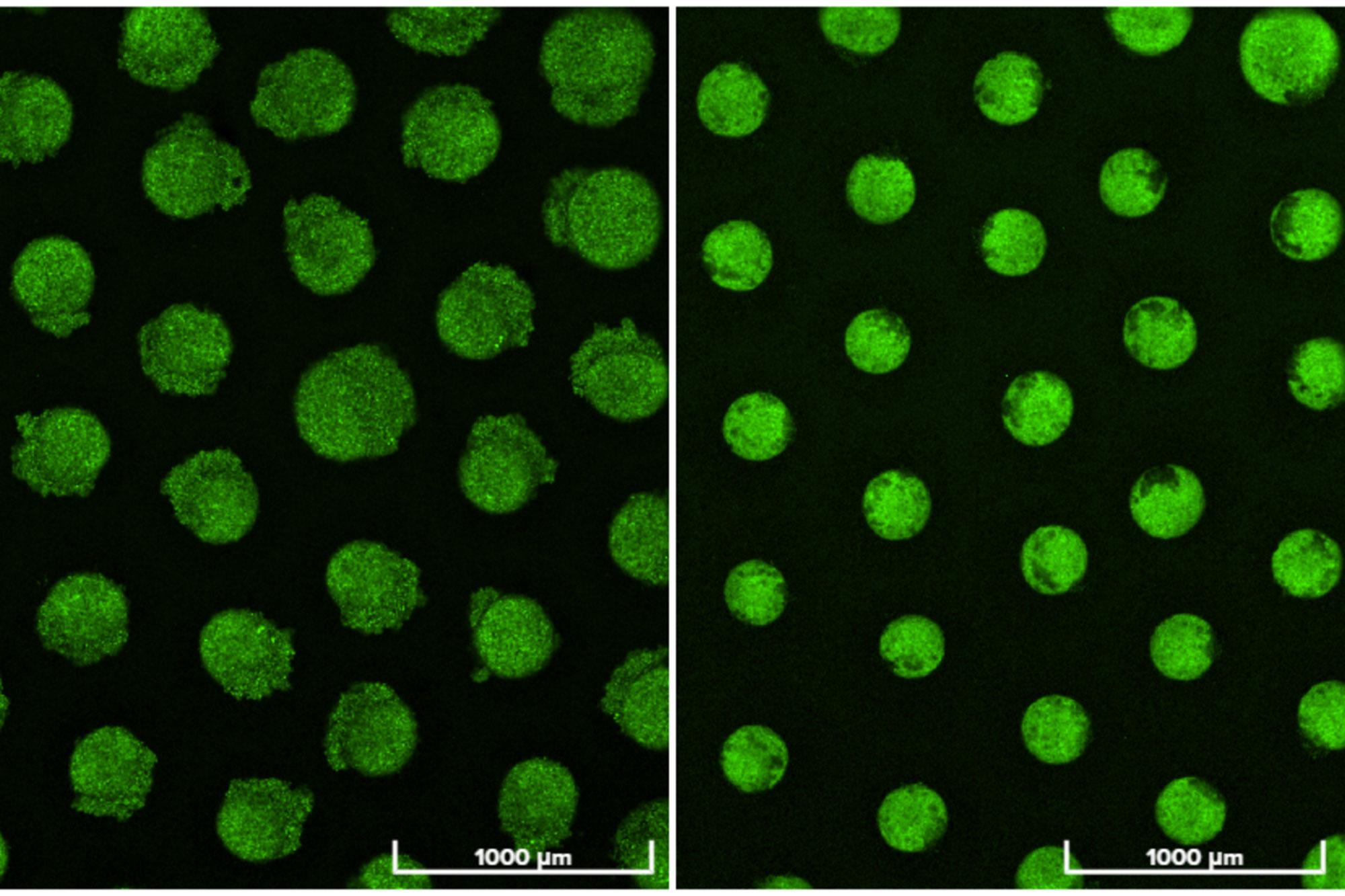
From lab animals to human brain models: an NRP 79-research team is developing a faster, more accurate way to test whether everyday chemicals are safe for our brains.
We are surrounded by chemicals – in our homes, workplaces and the food we eat. Many of them can interfere with brain development, particularly in children and unborn babies. But testing their safety thoroughly is expensive, slow and heavily dependent on animal experiments. David Pamies and his team at the University of Lausanne are developing a faster, better and more human-relevant alternative: a three-dimensional brain model grown from human stem cells to detect how chemicals damage the brain's protective nerve coating. As part of NRP 79 "Advancing 3R", the project could fundamentally change how chemical safety is assessed. We spoke with David about the state of the project, key findings and what comes next.
From paints to pesticides, we are exposed to chemicals every day – and many of them may interfere with brain development. Why is comprehensive safety testing for these substances still so rarely carried out, and what role do the limitations of current animal models play in this gap?
One major reason is that current testing methods are extremely slow, expensive and still heavily dependent on animal studies. A single safety study can take months, cost over a million dollars and require large numbers of animals. Because of this, many chemicals in everyday products have never been fully tested for their effects on the developing brain.
There is also a scientific problem: Animal brains and human brains do not develop in exactly the same way, so results from animals do not always predict what happens in people. That is why researchers are now developing more human-relevant methods based on human cells.
Your team has developed a three-dimensional brain model based on human stem cells – the so-called BrainSpheres. What makes this model a more promising alternative to animal testing, both scientifically and ethically?
BrainSpheres are tiny three-dimensional brain-like tissues made from human stem cells. They contain several important brain cell types and mimic key stages of human brain development. What makes them especially exciting is that they can form myelin, the protective coating around nerve cells, which is very difficult to reproduce in the laboratory. Because they are based on human biology, they may provide more relevant information than animal models. At the same time, they can help reduce the need for animal testing.
Where does the project stand at the moment, and what have been the biggest scientific or technical challenges on the way?
We have already shown that the model can detect chemicals known to damage myelin. Our current focus is to make the system more automated and less dependent on manual analysis by the operator. In practice, this means adapting the method for automated compound screening. So far, we have tested around 20 compounds and are currently preparing the publication of the results.
Looking back at your work so far, which insights have proven the most important – and which ones surprised you most?
One of the biggest challenges has been adapting high-powered microscopy techniques to work effectively inside complex brain models like ours. These techniques were originally developed for simpler cell cultures, and applying them to three-dimensional structures turned out to be far more technically demanding than we initially expected.
What surprised me most is how rapidly the field has evolved in recent years. There are now many different platforms and culture systems specifically designed for 3D biology, and this has opened a lot of new possibilities. We realised that choosing the right platform can dramatically improve imaging quality, automation, and the reliability of endpoint measurements in organoids. It really shows how quickly the technology around these models is advancing.
Your project specifically looks at myelin, the protective coating around nerve cells. Why is myelin such a sensitive and meaningful indicator for assessing the effects of chemicals on the developing brain?
Myelin is essential for proper brain function. During development, its formation is a highly coordinated process involving several different cell types. This makes it sensitive: If a chemical disrupts any part of this process, myelin formation can be affected. Because myelin plays a key role in how we think, move and develop, damage to it is a particularly telling sign that something has gone wrong. Testing for myelin damage has also been technically challenging until now, which is why this work could help fill an important gap.
You are in regular dialogue with European authorities to ensure the method can ultimately be validated and accredited. What does this process involve, and what are your next milestones on the road to regulatory acceptance?
Regulatory acceptance is not just about having an interesting model. The method must be reliable, reproducible and useful for decision-making. The process involves several steps: establishing a clear standard procedure, defining what biological change is being measured, testing chemicals with known effects, and demonstrating that the method delivers consistent results across different laboratories. We hope that after finalising the data, the European Food Safety Authority could help us to move the method into regulation.
If your method becomes part of the standard set of tests for chemical toxicity, how could this change the way chemicals are assessed in the future – for industry, regulators, and consumers?
Existing laboratory-based testing methods have already made it much easier to assess the effects of chemicals on the developing brain. But gaps remain – and myelin disruption is one of them. Closing these gaps is essential for a more complete testing strategy.
For industry, these methods mean faster and more reliable screening of potentially harmful substances. For regulators, they provide a more complete picture of how chemicals affect the developing brain. For consumers – particularly children and pregnant women – the long-term benefit is simpler: safer products.