
Insect larvae as an alternative to the mouse model
Antibiotic-resistant bacteria silently colonise the gut of healthy people worldwide. A University of Bern research team has now found a faster, cheaper and more ethical way to test how to get rid of them.
The project by Andrea Endimiani at the University of Bern is the second NRP 79 project to complete its research phase. The team worked on a new approach to fight so-called superbugs in the gut – using insect larvae instead of mice. "Some bacteria in our gut are resistant to almost all antibiotics," says Endimiani. "If they cause an infection, there are very few treatment options left." His team looked for ways to remove these superbugs from the gut before they start to cause harm.
A growing problem – with few solutions
"Multidrug-resistant enterobacteria are constantly increasing," says Endimiani. "For instance, in patients, Escherichia coli resistant to the antibiotic cephalosporin increased in the last ten years from 9 percent to 12 percent prevalence." And the problem reaches far beyond the hospital: at least 8 percent of the healthy population carry such bacteria in their gut without any symptoms – travellers returning from high-risk countries are particularly affected. This silent colonisation is especially dangerous: Resistant bacteria can lie dormant and wait for an opportunity – such as a weakened immune system – and then trigger life-threatening infections. Carriers have a demonstrably higher risk of developing such infections – and today they are barely manageable.
Finding ways to remove these bacteria from the gut requires in vivo models: living organisms in which researchers can observe how bacteria behave and how they react to potential treatments. Mouse models are currently the gold standard for this kind of research. However, they have significant
downsides: results from mice cannot always be transferred to humans, the experiments are expensive and labour-intensive, and there are important ethical concerns.
Larvae instead of mice
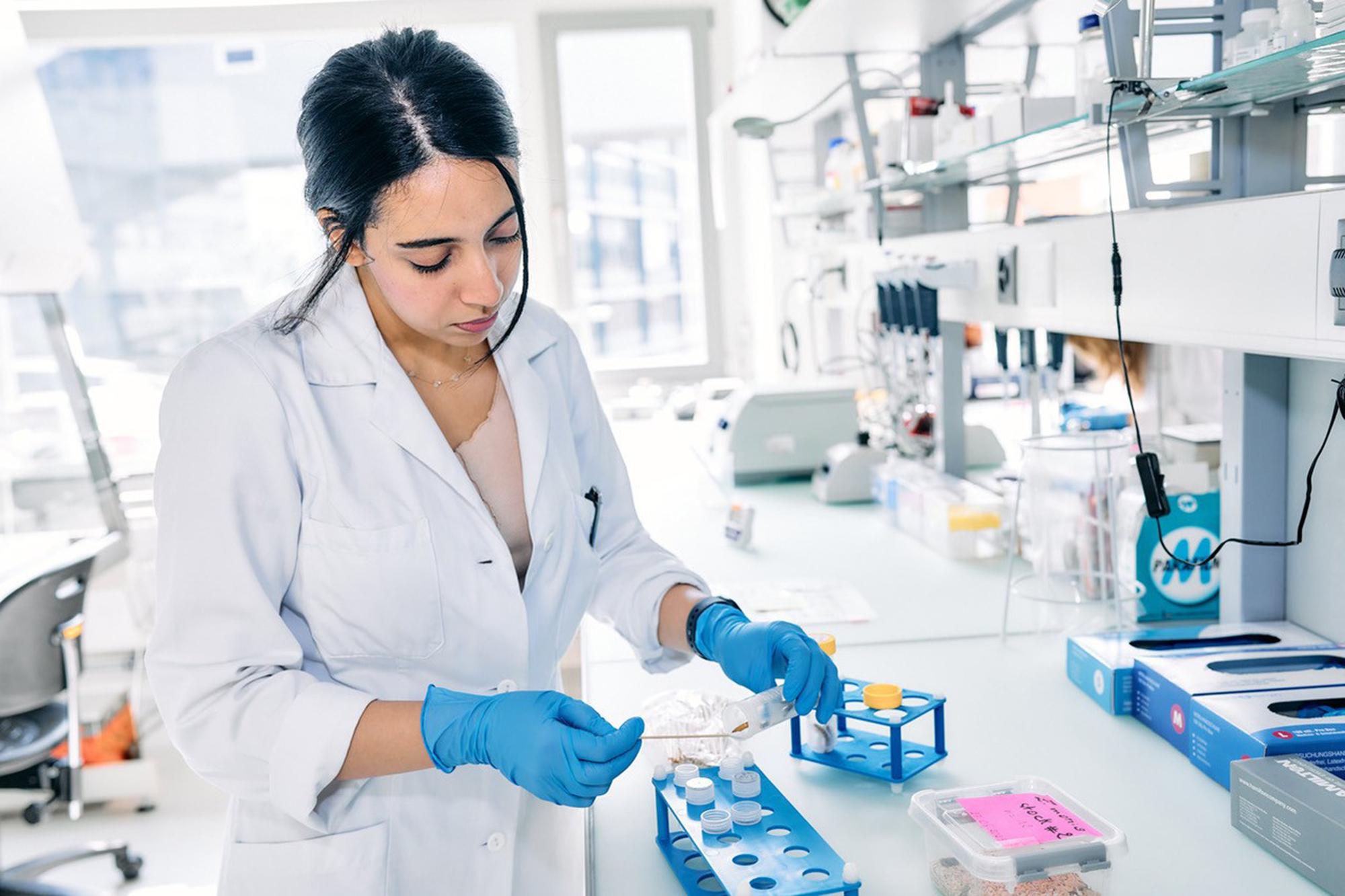
The research team therefore colonised via force-feeding the gut of Zophobas morio larvae – a type of large mealworm – with multidrug-resistant bacteria commonly found in hospital patients, specifically with three clinically important superbugs: Escherichia coli, Klebsiella pneumoniae and Salmonella enterica. The team then tested whether a special bacteriophage cocktail – viruses that attack bacteria – could eliminate the superbugs from the larvae’s gut.
The larvae could indeed be colonised with all three superbug species. The bacteriophage cocktail successfully cleared the bugs that were sensitive to the phages, but had no effect on phage-resistant strains. In one of the most striking findings, when larvae and mice received phages as a preventive treatment, the bacteria could not establish themselves in the gut at all.
As Endimiani puts it, "using the larva model, we showed that there are options to get rid of the superbugs from the gut – for instance, using bacteriophages".
In this way, the larvae model was successfully validated against the mouse model. The two models showed broadly comparable outcomes, supporting the larvae model as a credible alternative with genuine scientific substance.
A stepping stone toward fewer experiments involving animals
The larvae model does not replace the mouse model entirely, but could serve as a first screening step: Many possible strategies can be tested quickly and cheaply, with only the most promising ones moving on to mice, significantly reducing animal use while speeding up the search for new treatments. The approach is also not limited to the three superbug species studied; it can be extended to further multidrug-resistant bacteria, contributing to a broader toolkit in infection research: faster, cheaper – and with far fewer ethical hurdles than current standard methods.