
Replacing animals in antiviral research – one cell at a time
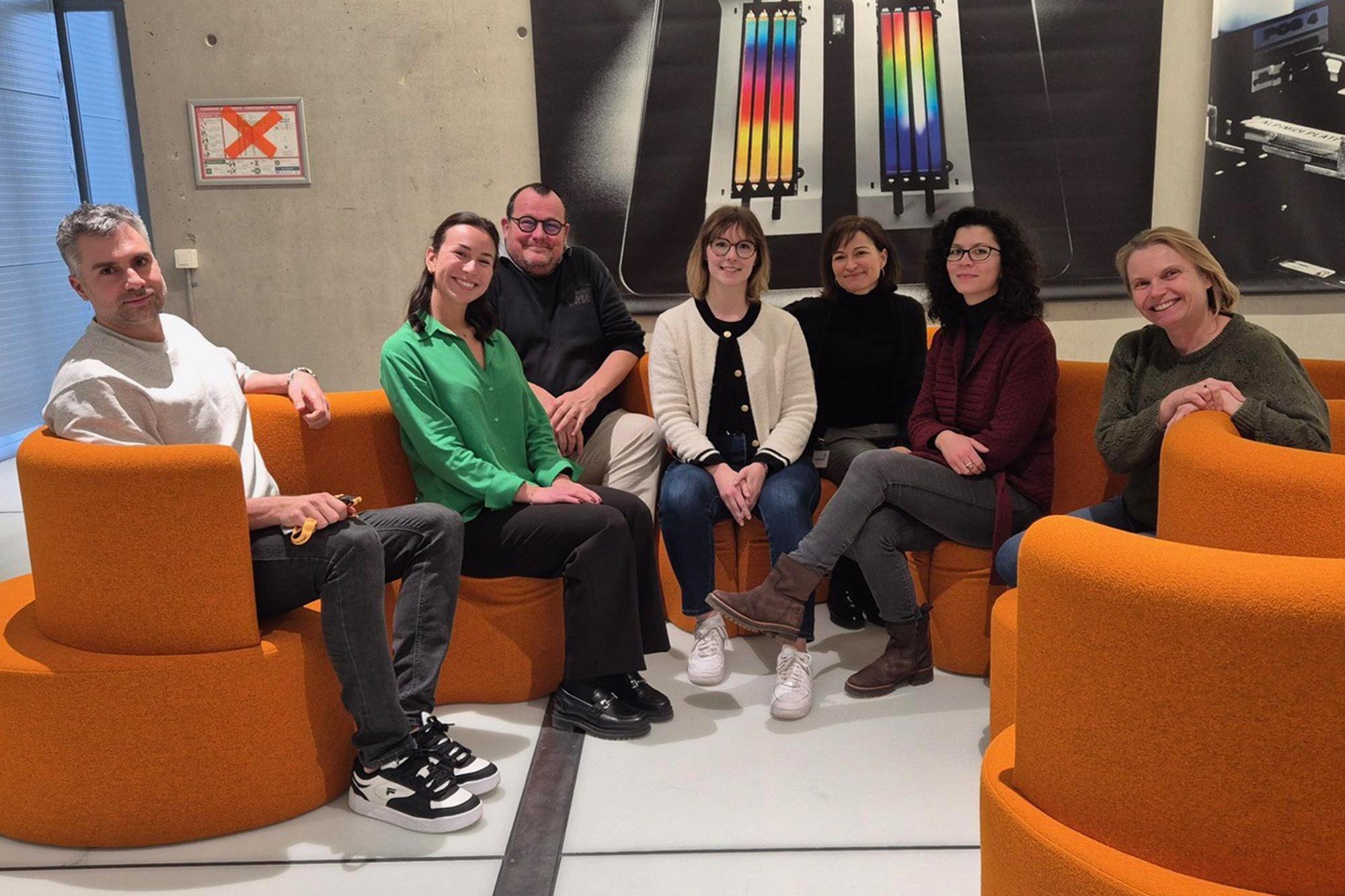
Growing human airway tissue instead of animal models: A research team at the University of Geneva is developing a drug screening platform that could revolutionise antiviral drug development.
Effective treatments for Covid-19 and other respiratory viral diseases are still limited – partly because current animal models often fail to predict how drugs will behave in humans. Caroline Tapparel Vu, Professor at the University of Geneva, and her team are pursuing a different path: testing antiviral compounds directly on human airway tissue (human airway epithelia (HAE)); built in the lab from human samples. As part of the NRP 79 "Advancing 3R", and in collaboration with the company Epithelix and academic partners, they are building a screening platform that could revolutionise antiviral drug development. We spoke with her about the team’s progress, findings and what's next.
Why do current animal models so often fall short in antiviral research – and why do their data fail to translate to the human situation?
There are two layers to the problem. First, the cell lines commonly used for initial antiviral screening are cancer cells that have accumulated chromosomal mutations over time and differ substantially from healthy human airway cells. Since respiratory viruses depend on specific host factors to enter and replicate in cells, testing them in these cancer cell lines leads to a major disconnect from the human situation.
Second, when researchers try to validate possible drug candidates in animal models, a similar mismatch arises: Most human respiratory viruses simply cannot infect mice. Workarounds exist, but these approaches take the experiment even further from the real-world situation. The result is a two-step filter that selects compounds based on models biologically distant from human tissue. When those candidates eventually reach clinical trials, they may fail precisely because the environment they were tested in was never a good proxy for the one that matters.
What makes an in vitro model a more promising alternative to animal models – both scientifically and ethically?
The key advantage is biological fidelity. These models are built from cells taken directly from human patient biopsies. Grown under the right conditions, these cells develop into a tissue that closely mirrors the cellular composition and tissue architecture of the real respiratory tract in humans. Our team is currently using single-cell RNA sequencing – a technique that profiles the gene activity of every individual cell in a sample – to compare this reconstructed tissue against published human datasets and against mouse tissue. The early results suggest this tissue model is a much closer match to human upper airway than mice are.
In practice, this lets us quickly spot drug candidates that look promising in cancer cell lines but have no effect at all on healthy human tissue. We can drop them before they are ever tested in animals. Hydroxychloroquine is a good example: early in the Covid pandemic it seemed effective in cell-line tests, but it failed in clinical trials. It does not work in our model either – so the model could have flagged much earlier that it was not a promising lead. Ethically, this directly reduces the number of animal experiments: compounds that human tissue already shows to be unsuitable are simply not pursued any further.
What have been the biggest challenges so far and where do you currently stand with the project?
The biggest obstacle has been the biosafety regulations around SARS-CoV-2. The virus is classified at biosafety level 3, requiring specialized containment facilities and full personal protective equipment. While the University of Geneva has such a facility, it is not equipped for animal experimentation. We therefore had to conduct our experiments at EPFL. Obtaining the necessary intercantonal authorization took considerable time, and, in addition, the needed EPFL facility has been undergoing maintenance for more than a year, significantly delaying the project timeline. A request for a one-year extension has been submitted to allow the remaining mouse experiments to be completed, and the funding is still in place.
The team has validated the HAE model in terms of epithelial cell composition – confirming it is a strong surrogate for human airway tissue – and has compared antiviral drug efficacy across the ex vivo and mouse models. Results in mice proved quite variable, which is why additional experiments are needed. The single-cell RNA data are currently being analyzed.
What are the most important findings of your research to date and were there results that surprised you?
The central finding so far is that the HAE model is a genuinely good surrogate for human airway epithelium – at least at the level of the epithelial cells that are the virus's primary target. Single-cell analysis confirms that the cell-type diversity in the reconstructed tissue matches what has been documented in human datasets.
The mouse data also brought a finding worth noting: Mice showed almost no viral presence in the nasal tissue, whereas the HAE model correlated well with human infection patterns – a direct illustration of how the mouse is a poor proxy for human upper airway infection.
You are building a screening platform to test antiviral substances on a large scale. How will it work in practice, who will be able to use it and what are your next milestones?
Alongside the main project, we have built a high-throughput antiviral screening platform based on human airway organoids. This platform has now been fully developed and validated, and a manuscript describing its establishment and validation is currently in preparation.
A significant finding emerged from the high-throughput screening. Using respiratory syncytial virus (RSV) as a model, we compared antiviral screening results obtained in human airway organoids and conventional cancer-derived cell lines. Several compounds identified as active in cell lines showed no activity in the organoid model, while some compounds active in organoids were missed in cell-line-based screens. These results demonstrate the ability of the organoid platform to eliminate false-positive candidates early and to identify promising antivirals that would otherwise be overlooked.
Going forward, the plan is to validate the platform for additional viruses, e.g. for influenza virus, rhinovirus, to demonstrate applicability beyond RSV. In the longer term, the platform could be commercialized through our collaborator Epithelix, a Geneva-based company that already provides antiviral and toxicity testing services to major pharmaceutical companies and has expressed interest in offering this high-fidelity screening model as part of its service portfolio.
You are collaborating with Epithelix and academic partners. How important is this bridge between academia and industry, and if your project succeeds, how could it change the way antiviral drugs are developed in the future?
Collaborations have been essential from the start. Epithelix provided both the scientific foundation and a commercially viable path for scaling the work. The University of Geneva provided the robotic infrastructure for high-throughput reading that the academic lab alone could not have built. A stem cell company supplied the specialised medium and protocols needed to grow the organoids, and provided them at a discount, which mattered given the costs involved.
Looking ahead, the vision is for this type of screening to become a standard step in antiviral pipelines rather than an optional add-on. Industry interest is already visible: Roche has begun incorporating ex vivo models into its own pipeline. Wider adoption could surface better candidates earlier, reduce costly late-stage failures and cut unnecessary animal experimentation.
The team is also looking beyond the current model: first by adding immune cells to the co-culture, then potentially connecting respiratory, liver and brain tissue on organ-on-a-chip platforms to build a system that more fully captures the systemic effects of both infection and treatment.